
Hair Simulation
For many people experiencing hair loss or thinning, scalp simulation stands out as a non-surgical and quick-result solution. This method, which creates the illusion of hair follicles with special pigments applied to the scalp, is preferred both to cover baldness and to make existing hair appear denser. So what exactly is scalp simulation, who is it suitable for, and how long does it last? In this article, Istanbul SMP Center brings together all the questions you may have.
Contact Us
Istanbul SMP Center
Contents
- What is Hair Simulation?
- How Is Scalp Simulation Done?
- How Many Sessions Does Scalp Simulation Take, and How Long Does It Last?
- Difference Between Scalp Simulation and Hair Transplant
- Who Is It Suitable For?
- Factors Affecting the Price of Scalp Simulation
- Frequently Asked Questions
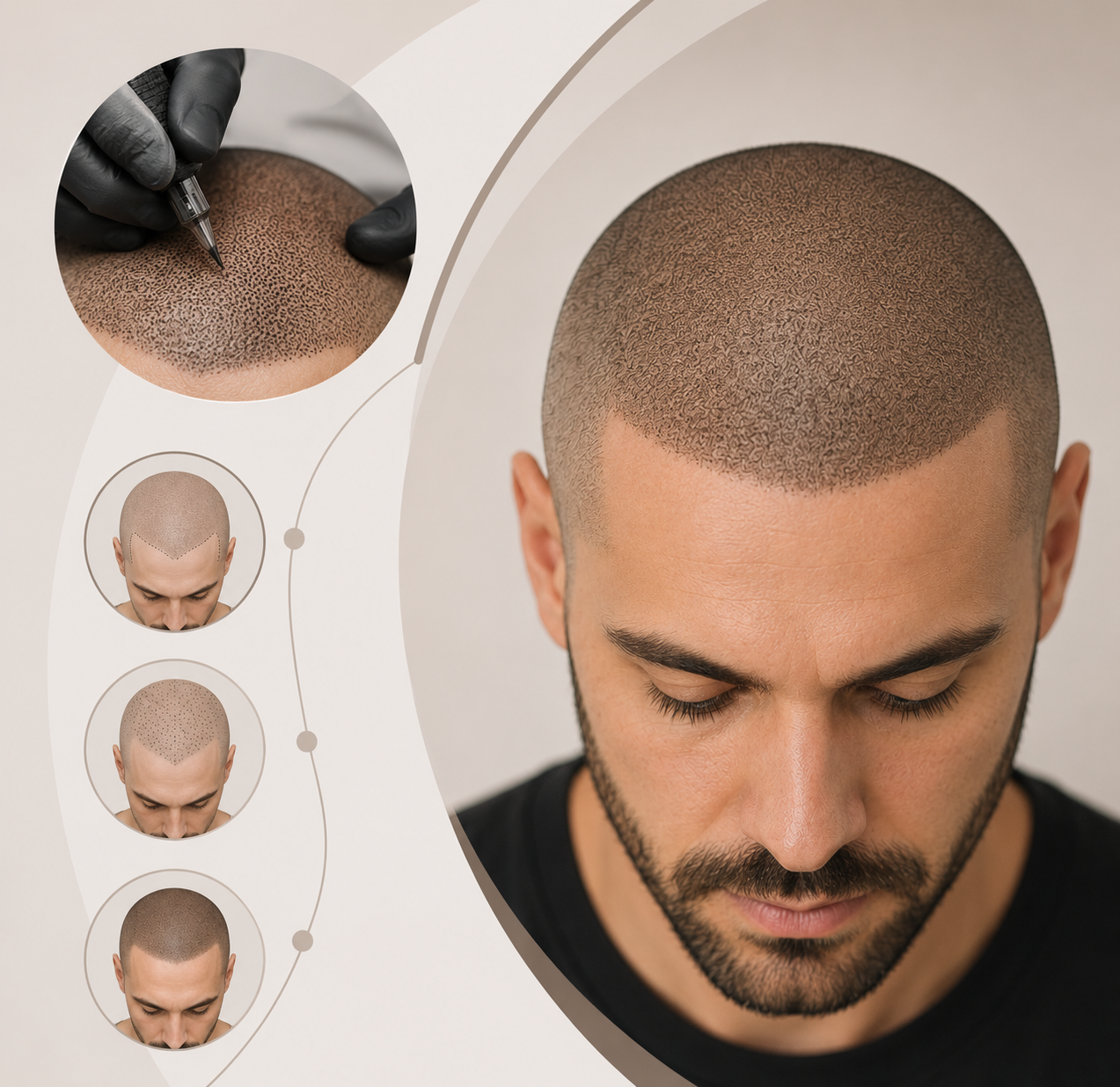
What is Hair Simulation?
Hair simulation, medically known as scalp micropigmentation, is a cosmetic procedure that creates the appearance of hair follicles by applying special organic pigments in fine dots onto the scalp. The goal is not to grow new hair but to make existing hair or bald areas look optically fuller and denser. When thousands of tiny pigment dots combine, the scalp appears as if it has short-cut real hair strands. This technique naturally conceals baldness, thinning hair, or gaps after hair transplantation.
How Is Scalp Simulation Done?
Before the procedure, the hairline, density target, and pigment tone are determined together with the individual. Using sterile, single-use micro needles, the pigment is placed into the upper layer of the scalp at the same depth as real hair follicles. A session typically takes a few hours, and apart from mild redness afterward, no noticeable marks remain. For the most natural and dense results, typically 2 to 4 sessions are applied with intervals of two to three weeks between sessions.
How Many Sessions Does Scalp Simulation Take, and How Long Does It Last?
The number of sessions varies depending on the size of the bald or sparse area; a single session may be sufficient for small areas, while for larger areas, it can go up to 3 to 4 sessions. The durability period averages between 2 and 5 years, influenced by skin type, sun exposure, and care habits. The pigment fades gradually and naturally over time, not abruptly. When desired, touch-up sessions can restore the color's vibrancy.
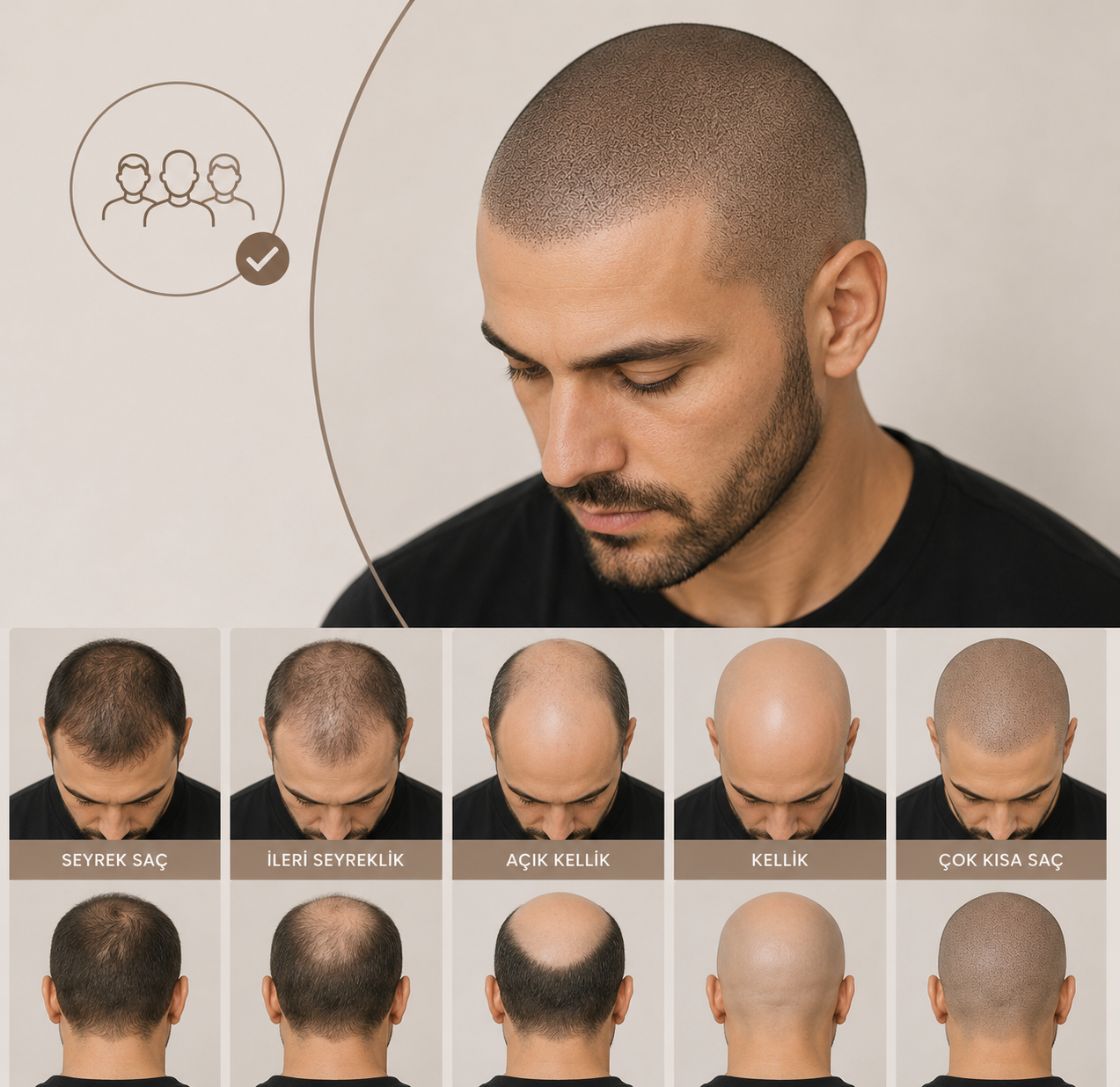
Difference Between Scalp Simulation and Hair Transplant
Hair transplantation is a surgical procedure where a person's own hair follicles are taken from a donor area and transplanted to bald areas, producing real, growing hair strands. Hair simulation, on the other hand, is an optical solution that does not produce hair but only creates the appearance of hair. Hair transplantation requires a longer healing process, while hair simulation allows a return to daily life within a few days. The two methods can be alternatives or used together to increase density after hair transplantation.
Who Is It Suitable For?
Hair simulation is suitable for those with male pattern hair loss, individuals with thinning hair, people with insufficient donor area for hair transplantation, and those who want to increase density after hair transplantation. It can also be used to cover scars, burns, or congenital bald areas. In women, it can be applied to intensify the hairline in cases of hair thinning. Active hair loss, skin diseases, or pregnancy require prior specialist evaluation.
Factors Affecting the Price of Scalp Simulation
There is no fixed price policy for hair simulation, as each client's needs differ. The size of the area to be treated, whether the person has had prior hair transplantation, skin type, and targeted density directly affect the price. For example, in individuals who have undergone hair transplantation, deformities in the donor area may require more sessions. Exact pricing information is provided personally after a free consultation.
Frequently Asked Questions
We have compiled answers to your questions about hair simulation for you.
 English
  Turkish
  Arabic